
Are you experiencing jaw pain while chewing, stiffness when opening your mouth, or discomfort near your ears? Do you notice painful clicking, difficulty yawning or episodes when your jaw feels stuck?
These symptoms can have several causes, including temporomandibular disorders (TMDs), dental problems, muscle tension or jaw injury. A clinical examination is important to identify the possible cause and determine the appropriate next steps.
Dr Nawale's DentoCare provides dental consultations in Garkheda, Chhatrapati Sambhajinagar (formerly Aurangabad), Maharashtra. If you are looking for jaw pain treatment in Chhatrapati Sambhajinagar, our clinic can assess dental concerns and help you understand suitable treatment or referral options based on your symptoms.
Book a consultation to discuss your jaw pain.
- Clinic: Dr Nawale's DentoCare
- Address: 11, Atharva Plaza, Stadium Road, Garkheda, Chhatrapati Sambhajinagar, Maharashtra – 431009
- Phone: +91 90909 70971
- Hours: Monday–Saturday, 10:00 AM–8:00 PM
- Email: info@drnawaledentocare.com
What Is the Temporomandibular Joint (TMJ)?
The temporomandibular joints are located on both sides of your head, just in front of your ears. They connect your lower jaw to your skull and help you speak, chew, yawn and open or close your mouth.
Temporomandibular disorders (TMDs) are a group of conditions that affect the jaw joints, the muscles used for chewing and surrounding tissues. They may cause pain, stiffness, restricted jaw movement or other symptoms.
The terms are different: TMJ refers to the joint, while TMD refers to disorders affecting the joint and related muscles or tissues. Jaw pain does not automatically mean that you have a TMD. Other dental and medical causes may need to be considered.
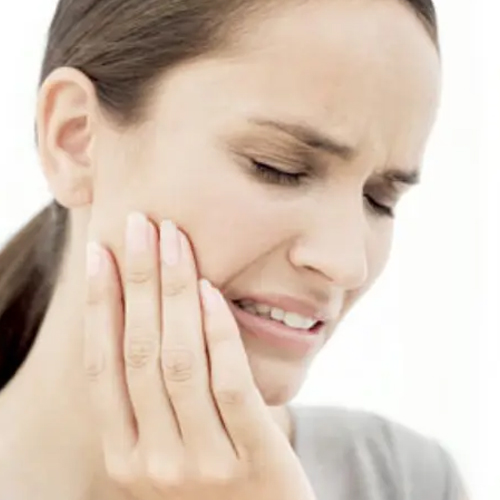
Common Symptoms of Jaw Pain and TMJ Disorders
Symptoms vary depending on the underlying cause. You may need a dental assessment if you experience:
- Pain around the jaw joint or in the chewing muscles
- Discomfort when chewing or biting
- Jaw stiffness, especially after waking up
- Difficulty opening your mouth fully
- Painful clicking, popping or grinding sounds when moving the jaw
- Jaw locking or episodes when the mouth becomes difficult to open or close
- Pain spreading towards the face, temple or neck
- Headaches associated with jaw movement or muscle discomfort
- A change in how your upper and lower teeth meet
A clicking sound without pain or restricted movement is common and does not necessarily require treatment. However, persistent pain, locking or difficulty moving the jaw should be assessed.
What Causes Jaw Pain?
Jaw pain can arise from different conditions. Some possible causes include:
1. Temporomandibular Disorders (TMDs)
Problems affecting the jaw joint, its disc, or the muscles that control jaw movement can cause pain, stiffness and reduced movement. The precise cause may not always be clear.
2. Teeth Grinding or Jaw Clenching
Clenching or grinding the teeth, sometimes during sleep, can place additional strain on the chewing muscles and teeth. A dentist can assess signs of tooth wear, muscle tenderness and other related concerns.
3. Dental Problems
Tooth decay, dental infection, gum problems or inflammation around a tooth can sometimes cause pain that is felt near the jaw. A dental examination can help distinguish these problems from jaw-joint conditions.
4. Jaw Injury
An impact, accident or other injury can affect the jaw, teeth or surrounding tissues. Sudden pain after an injury should be evaluated promptly, especially if you have swelling, bleeding or difficulty opening or closing your mouth.
5. Joint Inflammation or Arthritis
Some joint conditions can affect the temporomandibular joint and contribute to pain or limited movement. Further medical evaluation may be needed when these conditions are suspected.
6. Muscle Tension and Stress-Related Habits
Stress may contribute to habits such as clenching the jaw. Muscle tension can aggravate symptoms in some people, although it should not be assumed to be the only cause of pain.
Important: Jaw pain can have more than one cause. Treatment should be based on the findings of an examination rather than symptoms alone.
How Is Jaw Pain Diagnosed?
The first step is to understand your symptoms and assess your jaw, teeth and surrounding tissues. At Dr Nawale's DentoCare, a dental consultation may involve the following, depending on your concerns:
1. Discussion of Your Symptoms
The dentist may ask when the pain started, where it occurs, whether it is constant or intermittent, and whether chewing, yawning or opening your mouth makes it worse.
2. Examination of the Jaw and Mouth
The clinician may assess jaw movement, muscle tenderness, joint sounds, the range of mouth opening, your teeth, gums and bite.
3. Dental Assessment
Because tooth-related pain can sometimes feel like jaw pain, the dentist may examine individual teeth and surrounding tissues for signs of decay, infection or other dental conditions.
4. Imaging or Referral When Appropriate
X-rays or other imaging may be recommended when clinically indicated. Some joint problems may require advanced imaging or assessment by a clinician with relevant expertise in orofacial pain or jaw-joint conditions.
Not every patient needs imaging. The appropriate investigations depend on symptoms and examination findings.
Jaw Pain Treatment Options
There is no single treatment suitable for every type of jaw pain. Management depends on the diagnosis, symptom severity and effect on everyday activities.
For many uncomplicated TMD-related symptoms, clinicians often consider conservative, reversible measures first. More complex procedures should be considered only when appropriate after an individual assessment.
1. Self-Care and Jaw Rest
For some mild symptoms, a clinician may recommend temporarily reducing activities that strain the jaw. Depending on your condition, measures may include:
- Choosing softer foods for a short period
- Avoiding chewing gum and very hard or chewy foods
- Avoiding excessive yawning or deliberately forcing the mouth open
- Applying a warm or cold compress, whichever is more comfortable
- Becoming aware of daytime jaw clenching
- Following gentle jaw exercises only when advised by a qualified clinician
These steps may help some people, but they do not replace assessment when symptoms are persistent or severe.
2. Medication, If Recommended
A dentist or doctor may recommend medication for pain or inflammation when appropriate. The choice depends on your medical history, other medicines, allergies and the likely cause of the pain.
Do not start prescription medicines or repeatedly take painkillers without professional advice.
3. Assessment for Teeth Grinding or Clenching
If there are signs of tooth grinding or clenching, your dentist may discuss habit management and whether a custom oral appliance, such as a night guard, is appropriate.
An appliance is not suitable for every patient and should be professionally assessed and fitted. Stop using an appliance and seek advice if it causes pain or worsens your symptoms.
4. Physiotherapy or Specialist Assessment
Some patients may benefit from guided physical therapy or assessment by a clinician experienced in orofacial pain and TMD management. The need for referral depends on the symptoms and examination findings.
5. Further Treatment for Selected Cases
Persistent or complex conditions may require specialist evaluation and additional treatment. Procedures involving the jaw joint or surgery are not first-line solutions for most uncomplicated TMD symptoms and should only be considered after careful assessment of potential benefits, risks and alternatives.
At Dr Nawale's DentoCare, the appropriate next step should be determined after assessing your dental concerns. If a jaw-joint condition requires expertise beyond the clinic's scope, an appropriate referral may be recommended.
What Can You Do at Home for Mild Jaw Discomfort?
While arranging an appointment, you may find these general measures helpful if there has been no significant injury and you have no urgent warning signs:
- Temporarily choose soft foods that require less chewing.
- Avoid gum chewing and biting hard objects.
- Keep your jaw relaxed instead of clenching your teeth.
- Try a warm or cold compress wrapped in a cloth.
- Avoid forcing the jaw through painful movements.
- Follow professional advice about exercises and medication.
Do not attempt to force a locked jaw back into position. If your jaw becomes stuck open or closed, or you cannot eat or drink adequately, seek urgent medical or dental care.
When Should You Seek Urgent Care for Jaw Pain?
If you are searching for jaw pain treatment in Garkheda or Chhatrapati Sambhajinagar (Aurangabad), Dr Nawale's DentoCare is located at Atharva Plaza, Stadium Road.
A consultation can help assess whether the discomfort may be related to your teeth, chewing muscles or jaw movement, and whether dental treatment, self-management guidance or referral is appropriate.
Meet Dr. Nitin Nawale
BDS | Dental Surgeon | Fellowship in Endodontics
Dr. Nitin Nawale practises at Dr Nawale's DentoCare in Garkheda, Chhatrapati Sambhajinagar. His clinic profile lists more than 22 years of clinical experience, with clinical interests in endodontics, root canal treatment, dental implants and full-mouth rehabilitation.
He completed his BDS at Government Dental College & Hospital, Aurangabad, and pursued a Fellowship in Endodontics at SMBT College, Sangamner.
A dental consultation can help assess whether jaw-area discomfort may be associated with a tooth or another dental condition. The appropriate clinician and treatment pathway depend on the examination findings.
View Dr. Nitin Nawale's profile:
https://drnawaledentocare.com/team-member/dr-nitin-nawale-dentist-aurangabad/
Meet Dr. Sheetal Nawale
BDS | Dental Surgeon | Fellowship in Restorative Paediatric Dentistry
Dr. Sheetal Nawale is a BDS-qualified dental surgeon at Dr Nawale's DentoCare. Her clinic profile lists a Fellowship in Restorative Paediatric Dentistry and clinical interests in smile designing, orthodontic treatment, conservative dentistry, restorative dentistry and pediatric dental care. Her profile states that she has been practising dentistry since 2004.
A dental assessment may help identify tooth-related problems that can contribute to pain around the jaw. Patients can contact the clinic to enquire about an appropriate consultation based on their symptoms and treatment needs.
View Dr. Sheetal Nawale's profile:
https://drnawaledentocare.com/team-member/dr-sheetal-nawale-dentist-aurangabad/
Jaw Pain Consultation at Dr Nawale's DentoCare
Seek urgent medical or dental assessment if you have:
- Severe or rapidly worsening pain
- Jaw pain following a significant injury
- Sudden inability to open or close your mouth
- Facial or jaw swelling with fever or signs of infection
- Difficulty swallowing or breathing
Jaw pain accompanied by chest pressure or pain, shortness of breath, sweating, nausea or pain spreading to the arm or neck can be a medical emergency. Call local emergency services immediately rather than assuming the pain is dental.
Persistent jaw pain, painful clicking, recurrent locking or difficulty chewing also warrants professional evaluation, even when it is not an emergency.
Why Consult Dr Nawale's DentoCare?
When choosing where to seek help for jaw pain, look for a clinic that assesses your symptoms carefully and explains the possible causes and treatment options.
At Dr Nawale's DentoCare, patients can enquire about:
- Dental assessment for tooth-related pain and oral health concerns
- Evaluation of symptoms affecting chewing and jaw movement
- Discussion of suitable treatment options based on clinical findings
- Advice about when further investigations or referral may be required
- Dental care at a convenient location in Garkheda, Chhatrapati Sambhajinagar
Treatment recommendations should be individualized. No particular result or complete relief from pain can be guaranteed.
Frequently Asked Questions About Jaw Pain Treatment
1. Where can I get jaw pain treatment in Chhatrapati Sambhajinagar?
You can contact Dr Nawale's DentoCare at 11, Atharva Plaza, Stadium Road, Garkheda, Chhatrapati Sambhajinagar (formerly Aurangabad), Maharashtra – 431009. Call +91 90909 70971 to enquire about an appointment.
2. What is the difference between TMJ and TMD?
TMJ stands for temporomandibular joint, the joint connecting your lower jaw to your skull. TMD refers to disorders affecting that joint, the chewing muscles or related tissues.
3. What are the common symptoms of TMJ disorders?
Symptoms can include jaw-joint or chewing-muscle pain, stiffness, limited mouth opening, painful clicking, locking and discomfort that spreads towards the face or neck. Similar symptoms can have other causes, so an examination is important.
4. Why does my jaw hurt when I chew?
Possible causes include muscle strain, clenching, TMD, tooth decay, dental infection or injury. A dental assessment can help identify the likely cause and determine whether referral is necessary.
5. Is jaw clicking always a sign of a TMJ disorder?
No. Clicking or popping without pain or restricted movement is common and does not necessarily require treatment. Painful clicking, locking or reduced movement should be assessed.
6. Can stress cause jaw pain?
Stress may contribute to jaw clenching or muscle tension in some people. However, persistent pain should not automatically be attributed to stress; other dental and medical causes may need to be ruled out.
7. How is TMJ disorder diagnosed?
Diagnosis usually starts with a symptom history and examination of the jaw, muscles, teeth and mouth. Imaging or referral may be recommended if the findings indicate that further assessment is needed.
8. What is the treatment for jaw pain?
Treatment depends on the cause. Some TMD-related symptoms can be managed with conservative measures such as temporary dietary changes, avoiding excessive jaw strain and clinician-guided self-care. Medication, appliances, physiotherapy or specialist treatment may be considered for selected cases.
9. Can jaw pain go away on its own?
Some mild jaw-joint or muscle symptoms improve without intensive treatment. However, persistent, worsening or recurrent pain, locking or difficulty chewing should be assessed by a qualified clinician.
10. Should I use a night guard for jaw pain?
A night guard may be considered for selected patients with teeth grinding or clenching, but it is not appropriate for everyone. Ask your dentist whether an appliance is suitable for your symptoms and dental condition.
11. Can a dental problem cause jaw pain?
Yes. Dental decay, infection, gum problems and other oral conditions can cause pain around the jaw. An examination helps determine whether the source is dental or related to the jaw joint or muscles.
12. When should jaw pain be treated as an emergency?
Seek urgent care for severe injury, rapidly increasing swelling, fever with signs of infection, inability to open or close the jaw, or difficulty swallowing or breathing. Jaw pain with chest pressure, breathlessness, sweating or pain spreading to the arm or neck requires emergency medical attention.
13. Which dentist should I consult for jaw pain at Dr Nawale's DentoCare?
The appropriate clinician depends on your symptoms and the suspected cause. Contact the clinic to discuss your concerns and confirm which dentist or referral option is most suitable.
14. Where is Dr Nawale's DentoCare located?
The clinic is at 11, Atharva Plaza, Stadium Road, Garkheda, Chhatrapati Sambhajinagar, Maharashtra – 431009. The city was formerly known as Aurangabad.
15. What are the clinic timings?
The published clinic hours are Monday to Saturday, 10:00 AM to 8:00 PM. Contact the clinic to confirm availability before visiting.
16. How can I book an appointment for jaw pain?
Call +91 90909 70971 or email info@drnawaledentocare.com to enquire about an appointment at Dr Nawale's DentoCare.
Book a Jaw Pain Consultation
Jaw pain can interfere with eating, speaking, yawning and everyday comfort. The right next step is to identify the possible cause and discuss suitable care.
If you are experiencing jaw discomfort, stiffness, painful clicking or difficulty chewing, contact Dr Nawale's DentoCare in Garkheda, Chhatrapati Sambhajinagar (Aurangabad), to enquire about a dental consultation.
Dr Nawale's DentoCare
11, Atharva Plaza, Stadium Road, Garkheda, Chhatrapati Sambhajinagar, Maharashtra – 431009
Phone: +91 90909 70971
Email: info@drnawaledentocare.com
Hours: Monday–Saturday, 10:00 AM–8:00 PM
HOW CAN WE HELP?
Schedule Your Consultation
Booking an appointment with our team is convenient and easy.