
Are you looking for a solution for crooked teeth, gaps, crowded teeth or an uneven bite? Braces and other orthodontic treatments can gradually move teeth into better alignment and improve how the upper and lower teeth meet. The appropriate treatment depends on your teeth, bite, gum health, age and individual orthodontic needs.
Dr Nawale's DentoCare is located at 11, Atharva Plaza, Stadium Road, Garkheda, Chhatrapati Sambhajinagar (formerly Aurangabad), Maharashtra. Patients can contact the clinic to enquire about teeth alignment options, including traditional braces and clear aligner treatment where clinically appropriate.
Orthodontic treatment is not only about appearance. Correcting certain alignment and bite problems may make teeth easier to clean and improve biting function. However, not every person needs braces, and treatment options differ according to the complexity of the case.
If you are considering braces for yourself or your child, arrange a dental consultation to understand the available options, expected treatment duration and costs.
Dr Nawale's DentoCare — Clinic Details
- Address: 11, Atharva Plaza, Stadium Road, Garkheda, Chhatrapati Sambhajinagar, Maharashtra – 431009
- Phone: +91 90909 70971
- Email: info@drnawaledentocare.com
- Clinic hours: Monday–Saturday, 10:00 AM–8:00 PM
What Are Dental Braces?
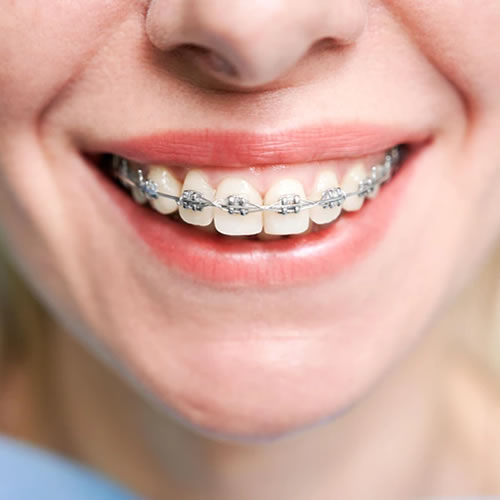
Dental braces are orthodontic appliances that apply controlled pressure to move teeth gradually into planned positions. Traditional braces generally use brackets attached to the teeth and a wire that guides tooth movement. Other components may be used depending on the treatment plan.
Braces may be used to address:
- Crowded or overlapping teeth
- Gaps between teeth
- Crooked or rotated teeth
- Certain overbites and underbites
- Crossbites and other bite irregularities
- Selected problems with how the upper and lower teeth meet
Treatment aims to improve tooth alignment and bite function where appropriate. The results, treatment duration and appliance choice depend on the individual diagnosis.
Who May Need Braces Treatment?
You may benefit from an orthodontic assessment if you or your child have:
- Teeth that overlap or appear crowded
- Noticeable gaps between teeth
- Upper or lower teeth that protrude
- Difficulty biting comfortably because of tooth alignment
- Teeth that do not meet evenly when closing the mouth
- Teeth that are difficult to clean because they overlap
- A concern about tooth alignment or smile appearance
Children, teenagers and adults may all be considered for orthodontic treatment. The best time to begin depends on dental development, jaw growth and the type of alignment problem. An early assessment does not automatically mean that braces must be fitted immediately.
A dentist or orthodontist should assess the teeth, gums and bite before recommending treatment.
Types of Braces and Teeth Straightening Options
1. Metal Braces
Traditional metal braces use metal brackets and wires to move teeth gradually.
Potential benefits:
- Suitable for many types of alignment problems
- Fixed to the teeth throughout treatment
- Do not depend on the patient remembering to insert a removable appliance
- Often a cost-conscious option compared with some less-visible alternatives
Things to consider:
- The brackets and wires are visible
- Food can collect around the brackets
- Careful brushing and regular adjustment appointments are important
Metal braces may be considered for children, teenagers and adults when clinically appropriate.
2. Ceramic Braces
Ceramic braces use tooth-coloured or less noticeable brackets. They work on a similar principle to conventional fixed braces but may be preferred by people who want a more discreet appearance.
Potential benefits:
- Brackets can blend more closely with natural tooth colour
- Fixed treatment does not rely on remembering to wear aligners
- May suit selected patients who want a less noticeable appliance
Ceramic braces can have different maintenance requirements and costs compared with metal braces. Your dental professional can explain whether they are suitable for your teeth and bite.
3. Lingual Braces
Lingual braces are attached to the inner surfaces of the teeth, facing the tongue, rather than the front surfaces.
They may be considered by selected patients who prefer less visible fixed braces. However, lingual treatment can involve specific technical requirements, comfort considerations and costs. Availability and suitability should be confirmed during consultation.
4. Clear Aligners
Clear aligners are custom-made, transparent trays designed to move teeth gradually. They can be removed for eating, drinking anything other than water, and cleaning the teeth.
Potential benefits:
- Less noticeable than many traditional braces
- Removable for meals and oral hygiene
- No fixed brackets or wires
Things to consider:
- They must be worn according to the treating professional's instructions
- They can be misplaced or damaged
- They may not be suitable for every complex alignment or bite problem
- Treatment depends on patient compliance and regular monitoring
Clear aligners are a category of orthodontic appliance. Invisalign is a specific clear-aligner brand, not the generic name for every clear aligner. Confirm which products and treatments the clinic currently offers before making a decision.
Which Type of Braces Is Best for You?
There is no single best option for everyone. The decision depends on the alignment problem, bite, treatment goals, oral health, lifestyle, budget and clinical suitability.
During your consultation, ask about the advantages and limitations of each suitable option, the expected timeline, the appointment schedule and the retention plan after treatment.
Benefits of Braces and Orthodontic Treatment
When appropriately planned, orthodontic treatment may provide several benefits:
- Improved tooth alignment: Helps position crooked, crowded or spaced teeth.
- Bite correction: May improve the way the upper and lower teeth meet.
- Oral hygiene support: Better-aligned teeth may be easier to brush and clean between.
- Chewing function: Correcting certain bite problems may improve how the teeth contact one another.
- Smile appearance: May address alignment concerns that affect the appearance of a smile.
- Individual treatment planning: Different appliances can be considered according to a patient's clinical needs.
Results vary, and braces cannot guarantee a particular appearance or outcome. Good oral hygiene and following the treatment plan are essential throughout orthodontic care.
Braces for Children and Teenagers
An orthodontic assessment can help identify tooth alignment and bite concerns as a child's permanent teeth develop. Some children may benefit from early monitoring or treatment, while others may be advised to wait until a more suitable stage of dental development.
Parents may consider an assessment if a child has crowded teeth, prominent front teeth, a crossbite, persistent spacing concerns or difficulty biting comfortably.
Treatment timing depends on the individual case. Not every child needs braces, and habits such as thumb sucking or mouth breathing should be assessed in context rather than assumed to require braces by themselves.
Before starting treatment, the dentist or orthodontist will consider dental development, oral hygiene, gum health and the child's ability to cooperate with the treatment plan.
Braces for Adults
Adults can also seek treatment for crooked, crowded or spaced teeth. Age alone does not rule out orthodontic treatment, but the health of the teeth, gums and supporting bone must be assessed.
An adult orthodontic consultation may consider:
- Tooth alignment and bite
- Existing fillings, crowns, bridges or implants
- Gum health and any history of gum disease
- Previous orthodontic treatment and tooth movement
- Whether braces, clear aligners or another approach may be suitable
- The expected treatment time and maintenance requirements
If you have gum disease, cavities or other active dental problems, these may need attention before orthodontic treatment begins.
What Is the Braces Treatment Procedure?
The process varies according to the appliance and complexity of the case. A typical treatment pathway may include the following stages.
Step 1: Initial Consultation
The dental professional discusses your concerns, treatment goals and dental history, then examines your teeth, gums and bite.
Step 2: Diagnostic Assessment
Photographs, dental impressions or digital scans and X-rays may be recommended when clinically indicated. These help assess tooth positions, jaw relationships and the factors affecting treatment planning.
Step 3: Personalized Treatment Plan
The clinician explains the suitable treatment options, expected duration, appointment frequency, fees and possible limitations. Any necessary dental or gum treatment may need to be completed before braces are fitted.
Step 4: Braces Placement or Aligner Delivery
For fixed braces, brackets are attached to the teeth and connected with an archwire. For clear aligners, custom-made trays are supplied according to the treatment plan, along with instructions on wearing and changing them.
Step 5: Regular Review Appointments
Fixed braces usually require periodic appointments to monitor tooth movement and make adjustments. Clear-aligner patients also need professional reviews to check progress and confirm that treatment is proceeding as planned.
Do not attempt to adjust braces or use unprescribed elastic bands yourself.
Step 6: Braces Removal and Retainers
When the planned tooth movement is complete, fixed braces can be removed by the treating professional. A retainer is generally recommended to help maintain the result because teeth can shift after orthodontic treatment.
The type and duration of retainer use depend on your individual case and the clinician's instructions.
How Long Does Braces Treatment Take?
There is no fixed duration for everyone. Some cases require relatively limited correction, while others need more extensive tooth movement and bite adjustment. Treatment may take months or a few years, depending on the complexity and the patient's response.
Factors that can influence treatment time include:
- The type and severity of the alignment problem
- Whether bite correction is required
- The selected appliance
- The health of the teeth and gums
- Attendance at scheduled appointments
- Following instructions for elastics, aligners or other appliances
- The need for additional treatment
Your dentist or orthodontist can provide an estimated timeline after examining your teeth. The estimate may change as treatment progresses.
Is Braces Treatment Painful?
Fitting braces is not usually described as sharp pain, but pressure, tenderness or discomfort may occur after placement and following adjustments. The discomfort generally varies between individuals and over the course of treatment.
To help manage everyday discomfort:
- Follow the advice given by your treating professional.
- Choose softer foods temporarily if chewing feels uncomfortable.
- Use orthodontic wax as instructed if a bracket rubs against the cheek or lip.
- Maintain gentle, thorough oral hygiene.
- Contact the clinic if pain is severe, persistent or worsening, or if a wire or bracket is damaged.
Ask your dentist or orthodontist before taking medication, particularly for a child or if you have other health conditions.
How to Care for Your Teeth During Braces Treatment
Keeping your teeth clean is particularly important when wearing fixed braces because food and plaque can collect around brackets and wires. Poor cleaning may contribute to cavities, gum inflammation and white marks on the teeth.
Follow these daily care tips:
- Brush carefully with fluoride toothpaste, paying attention to the areas around brackets and along the gumline.
- Use an interdental brush or other cleaning aid recommended by your dental professional.
- Clean between your teeth daily using a method suitable for your appliance.
- Limit frequent sugary snacks and drinks.
- Avoid hard, sticky or chewy foods that may damage brackets or wires.
- Attend scheduled appointments and any recommended professional cleaning visits.
- If using clear aligners, remove them for meals as instructed and clean your teeth before putting them back in.
- Contact the clinic if an appliance breaks, a wire becomes loose or treatment no longer fits as expected.
Do not skip orthodontic reviews because your teeth appear to be moving well. Professional monitoring helps check tooth movement and oral health.
What Is the Cost of Braces Treatment in Chhatrapati Sambhajinagar?
The cost of braces treatment depends on the treatment plan rather than just the type of appliance.
Factors that can affect the total cost include:
- Metal, ceramic, lingual braces or clear aligners
- The complexity of tooth alignment and bite correction
- The expected treatment duration
- Diagnostic records and scans, where needed
- Additional appliances or procedures
- Review appointments and adjustments
- Retainers after active treatment
- Any dental or gum treatment required before braces
For current braces treatment fees, call Dr Nawale's DentoCare at +91 90909 70971. A personalized estimate should be provided after an examination and treatment discussion.
Meet the Dentists at Dr Nawale's DentoCare
The choice of orthodontic treatment should be based on a clinical assessment of the teeth, bite, gums and individual needs. Patients should confirm which clinician will assess and supervise their orthodontic treatment and ask about relevant orthodontic qualifications and experience.
Dr. Nitin Nawale
BDS | Dental Surgeon | Fellowship in Endodontics
Dr. Nitin Nawale practises at Dr Nawale's DentoCare in Garkheda, Chhatrapati Sambhajinagar. His published clinic profile lists more than 22 years of clinical experience, with clinical interests in endodontics, root canal treatment, dental implants and full-mouth rehabilitation.
He completed his BDS at Government Dental College & Hospital, Aurangabad, and pursued a Fellowship in Endodontics at SMBT College, Sangamner.
His profile is provided as part of the clinic's dental team information. Patients enquiring about braces should confirm the appropriate treating clinician and relevant orthodontic experience with the clinic.
View Dr. Nitin Nawale's profile:
https://drnawaledentocare.com/team-member/dr-nitin-nawale-dentist-aurangabad/
Dr. Sheetal Nawale
BDS | Dental Surgeon | Fellowship in Restorative Paediatric Dentistry
Dr. Sheetal Nawale is a dental surgeon at Dr Nawale's DentoCare. Her published clinic profile lists a Fellowship in Restorative Paediatric Dentistry and clinical interests in smile designing, orthodontic treatment, conservative dentistry, restorative dentistry and pediatric dental care.
She completed her BDS at Government Dental College & Hospital, Aurangabad, and pursued fellowship training in Restorative Paediatric Dentistry at YMT Dental College & Hospital, Kharghar, Navi Mumbai. Her profile states that she has been practising dentistry since 2004.
Her published interests include orthodontic treatment. Patients should confirm the clinician's specific orthodontic qualifications, experience and role in their proposed treatment before beginning care.
View Dr. Sheetal Nawale's profile:
https://drnawaledentocare.com/team-member/dr-sheetal-nawale-dentist-aurangabad/
Why Contact Dr Nawale's DentoCare About Braces?
Patients considering teeth straightening need clear information about the available appliances, clinical suitability, costs, treatment duration and aftercare.
Contact Dr Nawale's DentoCare to enquire about:
- Assessment of crooked, crowded or spaced teeth
- Options for braces and clear aligners
- Orthodontic consultations for children, teenagers or adults
- Expected treatment duration and appointment schedule
- Fees, inclusions and retainer requirements
- Oral hygiene and aftercare during treatment
The clinic is located at Atharva Plaza, Stadium Road, Garkheda, Chhatrapati Sambhajinagar (Aurangabad), Maharashtra.
Frequently Asked Questions About Braces Treatment
1. Where can I get braces treatment in Chhatrapati Sambhajinagar?
You can contact Dr Nawale's DentoCare at 11, Atharva Plaza, Stadium Road, Garkheda, Chhatrapati Sambhajinagar, Maharashtra – 431009, to enquire about orthodontic assessment and available treatment options. Call +91 90909 70971.
2. What problems can dental braces correct?
Braces may be used to address crooked, crowded or spaced teeth and certain bite problems, including overbites, underbites and crossbites. The suitable treatment depends on a clinical assessment.
3. What types of braces are available?
Options may include traditional metal braces, ceramic braces, lingual braces and clear aligners. Availability and suitability vary, so ask the clinic which options are currently offered for your case.
4. Are clear aligners the same as braces?
Clear aligners are a type of orthodontic appliance, but they differ from fixed braces. Aligners are removable trays, whereas traditional braces use brackets and wires fixed to the teeth. Not every case is suitable for aligner treatment.
5. Are braces suitable for adults?
Yes, adults may be candidates for orthodontic treatment. The clinician must assess the teeth, gums, supporting bone, bite and any existing dental restorations before recommending treatment.
6. At what age should a child get braces?
There is no single age at which every child should start braces. An orthodontic assessment can help identify developmental concerns and determine whether treatment is needed now or monitoring is more appropriate.
7. How much do braces cost in Aurangabad?
The cost depends on the appliance, treatment complexity, duration and what is included in the treatment plan.
8. How long does braces treatment take?
Treatment can take months or a few years, depending on the alignment problem, bite correction required, appliance and patient compliance. An individual estimate can be provided after assessment.
9. Do braces hurt?
Some pressure, tenderness or discomfort may occur after braces are fitted or adjusted. Contact your treating professional if discomfort is severe, persistent or worsening.
10. Can braces improve my bite?
Braces can correct certain bite problems by moving teeth into planned positions. The result depends on the cause and complexity of the bite issue, and some cases may require additional treatment.
11. Can braces help with gaps between teeth?
Yes, braces or suitable clear aligners may close selected gaps. The clinician must first determine why the gaps are present and whether orthodontic treatment alone is appropriate.
12. What foods should I avoid with fixed braces?
Hard, sticky and chewy foods can damage brackets or wires. Follow the food guidance given by your treating professional and cut suitable foods into smaller pieces where needed.
13. How should I clean my teeth with braces?
Brush carefully with fluoride toothpaste, clean around brackets and wires, and clean between teeth daily using suitable aids. Your clinician may recommend an interdental brush and more frequent professional cleaning.
14. Do I need to wear a retainer after braces?
A retainer is generally recommended to help keep teeth in their new positions after active treatment. The type and wearing schedule depend on your case and the clinician's instructions.
15. What should I do if a bracket or wire breaks?
Contact your dental clinic for advice and arrange a repair if needed. Do not attempt to bend wires or repair the appliance yourself. If a sharp component is irritating your mouth, ask the clinic how to protect the area temporarily.
16. How do I book a braces consultation at Dr Nawale's DentoCare?
Call +91 90909 70971 or email info@drnawaledentocare.com. The clinic is at 11, Atharva Plaza, Stadium Road, Garkheda, Chhatrapati Sambhajinagar, Maharashtra – 431009. Clinic hours are Monday to Saturday, 10:00 AM–8:00 PM.
Book Your Braces Consultation
If crooked teeth, gaps or an uneven bite are affecting your smile or chewing, a professional assessment can help you understand the available options.
For braces treatment in Chhatrapati Sambhajinagar (Aurangabad), contact Dr Nawale's DentoCare to enquire about an appointment and discuss suitable teeth-straightening options.
Dr Nawale's DentoCare
11, Atharva Plaza, Stadium Road, Garkheda, Chhatrapati Sambhajinagar, Maharashtra – 431009
Phone: +91 90909 70971
Email: info@drnawaledentocare.com
Hours: Monday–Saturday, 10:00 AM–8:00 PM
HOW CAN WE HELP?
Schedule Your Consultation
Booking an appointment with our team is convenient and easy.