
Are you looking for a solution for a damaged, weakened or missing tooth? Dental crowns and bridges are restorative dental treatments that can help restore tooth structure, chewing function and the appearance of your smile when clinically appropriate.
Dr Nawale's DentoCare provides dental consultations at 11, Atharva Plaza, Stadium Road, Garkheda, Chhatrapati Sambhajinagar (formerly Aurangabad), Maharashtra. Our dental team assesses your teeth, gums and bite to help determine whether a crown, bridge or another treatment is suitable for your condition.
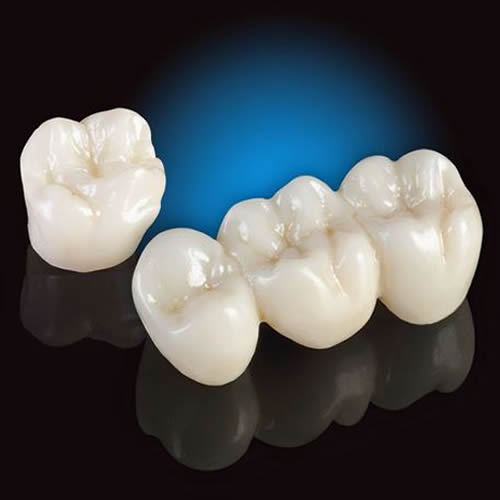
A dental crown is a custom-made restoration that covers a damaged tooth. A dental bridge replaces one or more missing teeth by supporting an artificial tooth with neighbouring teeth or dental implants, depending on the design.
The right treatment depends on the condition of your remaining teeth, the location of the missing or damaged tooth, your bite, oral hygiene and long-term dental needs.
If you need dental crowns or bridges in Chhatrapati Sambhajinagar, book a consultation to understand the available options.
Dr Nawale's DentoCare
- Address: 11, Atharva Plaza, Stadium Road, Garkheda, Chhatrapati Sambhajinagar, Maharashtra – 431009
- Phone: +91 90909 70971
- Email: info@drnawaledentocare.com
- Clinic hours: Monday–Saturday, 10:00 AM–8:00 PM
What Is a Dental Crown?
A dental crown, sometimes called a tooth cap, is a custom-made covering that fits over the visible portion of a tooth. It is designed to restore the tooth's shape, size and function while providing protection when the remaining tooth structure needs support.
A dentist may recommend a crown in situations such as:
- A tooth that has been weakened by extensive decay or a large filling
- A tooth that has fractured or suffered significant structural damage
- A tooth requiring restoration after root canal treatment, when a crown is clinically indicated
- A tooth that needs a full-coverage restoration for functional or restorative reasons
- A dental implant that requires a crown to complete the visible tooth replacement
Not every damaged tooth needs a crown. Depending on the amount of remaining healthy tooth structure, a filling, an onlay or another restoration may be more appropriate. Your dentist will assess the tooth before recommending treatment.
What Is a Dental Bridge?
A dental bridge is a fixed dental restoration used to replace one or more missing teeth. It includes an artificial tooth, known as a pontic, supported by natural teeth or dental implants, depending on the bridge design.
A conventional bridge is generally attached to prepared neighbouring teeth. Other designs may be suitable in selected cases, depending on the location of the gap and the condition of the supporting teeth.
A dental bridge may help:
- Replace a missing tooth or selected groups of missing teeth
- Restore some chewing functions
- Improve the appearance of a gap in the smile
- Support clearer speech when missing teeth affect pronunciation
- Restore the continuity of the dental arch
A bridge does not suit every missing-tooth situation. The supporting teeth must be assessed, and other options, including a dental implant or removable denture, may be worth considering.
Dental Crown vs Dental Bridge: What Is the Difference?
| Feature | Dental Crown | Dental Bridge |
|---|---|---|
| Main purpose | Covers and restores a damaged or weakened tooth | Replaces one or more missing teeth |
| Main components | A custom-made covering fitted over a tooth or implant | One or more artificial teeth supported by teeth or implants |
| When considered | When a tooth needs full-coverage restoration | When there is a gap caused by missing teeth |
| Tooth preparation | The affected tooth may need preparation | Supporting teeth may need preparation, depending on the design |
| Alternatives | Filling, onlay or another restoration, where suitable | Implant-supported restoration or removable denture, where suitable |
| Maintenance | Requires regular cleaning and dental reviews | Requires regular cleaning around the bridge and supporting teeth |
A crown and a bridge serve different purposes, although a treatment plan may involve both. A clinical examination helps identify which option is appropriate.
When Might You Need Dental Crown Treatment?
1. A Tooth with Extensive Decay
When decay has damaged a substantial part of a tooth, a crown may be considered if enough healthy tooth structure remains to support the restoration. The decay must be addressed before the final restoration is placed.
2. A Fractured or Weakened Tooth
A tooth that has lost substantial structure because of a fracture, wear or a large restoration may need additional protection. The extent of damage and the tooth's long-term prognosis help determine the appropriate treatment.
3. After Root Canal Treatment
Some teeth that have undergone root canal treatment become more vulnerable to fracture, particularly when a large amount of tooth structure has been lost. A crown may be recommended in selected cases to restore and protect the tooth.
Not every root canal-treated tooth automatically requires a crown. The decision depends on the tooth's location, remaining structure and biting forces.
4. Restoring a Dental Implant
A dental implant may support a custom-made crown that replaces the visible portion of a missing tooth. Implant treatment involves separate planning and assessment before the final crown is placed.
5. Restorative or Cosmetic Requirements
A crown can sometimes improve the shape and appearance of a tooth while restoring its function. However, a crown requires more extensive coverage than some cosmetic alternatives and should be recommended only when appropriate.
When Might You Need Dental Bridge Treatment?
The available materials differ in appearance, strength, suitability and cost. Your dentist can explain which options are available for your specific case.
1. Metal Crowns and Bridges
Metal restorations can provide strength and may be considered in selected situations, particularly where appearance is less important. Their metallic colour can make them less suitable for visible front teeth for some patients.
2. Porcelain-Fused-to-Metal (PFM)
These restorations combine a metal substructure with a tooth-coloured outer layer.
Potential advantages include:
- A tooth-coloured appearance
- A metal substructure for support
- Suitability for selected restorative situations
Possible limitations include wear or chipping of the porcelain layer and, in some cases, a visible metal margin near the gumline.
3. All-Ceramic or Porcelain Restorations
Ceramic restorations can provide a natural-looking appearance and may be considered for visible teeth when clinically suitable.
Their suitability depends on the specific material, restoration design, available tooth structure and bite forces.
4. Zirconia Restorations
Zirconia is a ceramic material used for selected crowns and bridges. Its strength and appearance depend on the type of zirconia and the design of the restoration.
Not every material is appropriate for every tooth. Your dentist will discuss the benefits, limitations, expected appearance and maintenance requirements of the available choices.
Types of Dental Crown and Bridge Materials
A dental bridge may be considered if you have one or more missing teeth and want a fixed replacement.
Your dentist may evaluate a bridge when:
- You have a gap following tooth loss or extraction
- The neighbouring teeth can suitably support a bridge
- You want a fixed restoration rather than a removable option
- Your bite and oral health are suitable for the proposed design
A conventional bridge may require preparation of the supporting teeth. If those teeth are healthy, this is an important consideration when comparing a bridge with an implant-supported restoration or a removable denture.
The most suitable choice depends on your oral health, the number and position of missing teeth, the condition of the neighbouring teeth, treatment time, maintenance requirements and budget.
What Is the Dental Crown and Bridge Procedure?
The treatment process varies depending on whether you need a crown for a natural tooth, a conventional bridge or an implant-supported restoration. For a conventional tooth-supported crown or bridge, treatment commonly involves the following stages.
Step 1: Dental Examination and Treatment Planning
The dentist examines the affected tooth or missing-tooth area, checks your gums and bite, and reviews your dental history.
X-rays or other investigations may be recommended when clinically indicated. If there is decay, gum disease or infection, it may need to be treated before the definitive restoration is placed.
Step 2: Tooth Preparation, If Required
For a conventional crown, the tooth may need to be reshaped to create space for the restoration. For a conventional bridge, the supporting teeth generally need preparation to accommodate the crowns that hold the artificial tooth.
The amount of preparation depends on the tooth, material and restoration design.
Step 3: Impression or Digital Scan
An impression or digital scan records the shape and position of the prepared teeth and surrounding structures. This information is used to fabricate a restoration that fits the treatment plan.
Step 4: Temporary Restoration, If Needed
A temporary crown or bridge may be provided while the final restoration is being made. Your dentist will explain how to care for it and what to do if it becomes loose or damaged.
Step 5: Fit and Bite Assessment
When the final crown or bridge is ready, the dentist checks its fit, contact with neighbouring teeth, appearance and bite. Adjustments may be needed before the restoration is cemented or bonded in place.
Step 6: Final Placement and Aftercare
Once the restoration is accepted clinically, it is secured using the appropriate technique. Your dentist will explain cleaning methods, foods or habits to be careful with, and when to return for review.
How many appointments are needed? The number varies according to the type of restoration, laboratory work, clinical findings and whether other treatment is required. Your dentist will provide an individual treatment schedule after examination.
Are Dental Crowns and Bridges Painful?
The experience depends on the tooth's condition, the procedure and individual sensitivity. Local anaesthesia is commonly used for tooth preparation when appropriate.
Some temporary sensitivity or gum tenderness may occur after treatment. Contact your dentist if pain is severe, persistent or worsening, or if your bite feels uneven after the restoration is placed.
A crown or bridge should not be expected to eliminate every type of tooth pain. If the tooth has infection or other underlying problems, these need appropriate assessment and management.
How Long Do Dental Crowns and Bridges Last?
Crowns and bridges can function for many years, but their lifespan varies. There is no single duration that applies to every patient.
Longevity can be influenced by:
- The material and design of the restoration
- The condition of the supporting tooth or teeth
- Gum health and oral hygiene
- Bite forces and teeth grinding
- Diet and habits such as biting hard objects
- Regular dental check-ups and maintenance
Crowns and bridges can become loose, chip, fracture or develop problems around the margins. The teeth supporting a restoration can also develop decay or gum disease.
Regular dental reviews can help identify issues early. Your dentist can advise on maintenance based on your restoration and oral health.
How to Care for Your Dental Crown or Bridge
Good oral hygiene is essential to help maintain the restoration and the natural teeth around it.
- Brush twice daily using fluoride toothpaste.
- Clean between your teeth every day.
- If you have a bridge, clean underneath the artificial tooth using a suitable method recommended by your dentist.
- Avoid biting hard objects and do not use your teeth to open packages.
- If you grind or clench your teeth, ask whether a protective appliance is appropriate.
- Attend routine dental examinations and professional cleaning as advised.
- Contact your dentist if the crown or bridge feels loose, chips, causes persistent discomfort or changes your bite.
A crown does not make the underlying tooth immune to decay. Similarly, a bridge does not prevent gum disease or problems affecting the supporting teeth.
Dental Crown and Bridge Cost in Chhatrapati Sambhajinagar
The cost of dental crowns and bridges depends on several factors, including:
- The type of material selected
- The number of crowns or artificial teeth required
- The complexity of the restoration
- The condition of the supporting teeth and gums
- Whether root canal treatment, gum treatment or other procedures are needed
- Laboratory fabrication and any temporary restoration
- Whether the plan involves dental implants
The existing page has mentioned an indicative cost of approximately ₹3,000–₹10,000 per unit. This range should be verified with the clinic before publishing as current pricing because costs vary by material, treatment requirements and the number of units involved.
For current crown and bridge charges, call +91 90909 70971. The final treatment plan and quotation should be provided after clinical assessment.
Dental Bridge vs Dental Implant: Which Is Better?
A conventional bridge and a dental implant are different options for replacing missing teeth. Neither is universally better for every patient.
A conventional bridge:
- Uses neighbouring teeth or other suitable support
- May be completed without implant surgery
- Usually requires preparation of supporting teeth for a conventional design
- Needs careful cleaning around and beneath the restoration
A dental implant:
- Uses a surgically placed implant to support a replacement tooth or restoration
- May avoid preparing neighbouring natural teeth for support
- Requires assessment of bone, gums, general health and suitability for surgery
- May involve a longer treatment timeline and additional procedures
Your dentist can discuss the benefits, limitations, risks, treatment time and costs of each option. A removable denture may also be appropriate in some situations.
Meet Your Dentists at Dr Nawale's DentoCare
Dental crowns and bridges require an individualized assessment of the affected tooth, the supporting teeth, gums and bite. Choosing the restoration material and design should be based on clinical findings rather than appearance or cost alone.
Dr. Nitin Nawale
BDS | Dental Surgeon | Fellowship in Endodontics
Dr. Nitin Nawale practises at Dr Nawale's DentoCare in Garkheda, Chhatrapati Sambhajinagar. His published clinic profile lists more than 22 years of clinical experience, with clinical interests in endodontics, root canal treatment, dental implants and full-mouth rehabilitation.
He completed his Bachelor of Dental Surgery at Government Dental College & Hospital, Aurangabad, and pursued a Fellowship in Endodontics at SMBT College, Sangamner.
His endodontic background is relevant when a tooth being considered for restoration also needs assessment for internal tooth damage or root canal treatment. The appropriate restorative plan depends on the individual tooth and clinical findings.
View Dr. Nitin Nawale's profile:
https://drnawaledentocare.com/team-member/dr-nitin-nawale-dentist-aurangabad/
Dr. Sheetal Nawale
BDS | Dental Surgeon | Fellowship in Restorative Paediatric Dentistry
Dr. Sheetal Nawale is a dental surgeon at Dr Nawale's DentoCare. Her published profile lists a Fellowship in Restorative Paediatric Dentistry and clinical interests in smile designing, orthodontic treatment, conservative dentistry, restorative dentistry and pediatric dental care.
She completed her dental degree at Government Dental College & Hospital, Aurangabad, and pursued fellowship training in Restorative Paediatric Dentistry at YMT Dental College & Hospital, Kharghar, Navi Mumbai. Her profile states that she has been practising dentistry since 2004.
Her restorative dentistry interests are relevant to the assessment of damaged teeth and restoration options. Contact the clinic to confirm which dentist is best suited to your specific crown or bridge treatment.
View Dr. Sheetal Nawale's profile:
https://drnawaledentocare.com/team-member/dr-sheetal-nawale-dentist-aurangabad/
Why Consult Dr Nawale's DentoCare for Crowns and Bridges?
When considering a dental crown or bridge, it is important to understand the condition being treated, the available alternatives, the expected maintenance and the total cost.
At Dr Nawale's DentoCare, patients can enquire about:
- Assessment of damaged or weakened teeth
- Options for replacing missing teeth
- Discussion of crown and bridge materials
- Evaluation of supporting teeth, gums and bite
- Treatment planning based on individual dental needs
- Advice on restoration care and follow-up
The clinic is located at Atharva Plaza, Stadium Road, Garkheda, Chhatrapati Sambhajinagar (Aurangabad), Maharashtra.
Frequently Asked Questions About Dental Crowns and Bridges
1. Where can I get dental crowns and bridges in Chhatrapati Sambhajinagar?
You can contact Dr Nawale's DentoCare at 11, Atharva Plaza, Stadium Road, Garkheda, Chhatrapati Sambhajinagar, Maharashtra – 431009. Call +91 90909 70971 to enquire about a dental consultation.
2. What is the difference between a crown and a bridge?
A crown covers and restores a damaged or weakened tooth. A bridge replaces one or more missing teeth by using supporting natural teeth or dental implants, depending on the design.
3. When does a tooth need a dental crown?
A crown may be recommended when a tooth has extensive damage, a large restoration, a fracture or another condition requiring full coverage. A dentist must assess whether a crown is necessary or whether a more conservative restoration is suitable.
4. Can a dental bridge replace a missing tooth?
Yes. A dental bridge can replace one or more missing teeth when the supporting teeth or implants are suitable. The choice of bridge depends on the gap, supporting structures and overall oral health.
5. What materials are used for dental crowns and bridges?
Options may include metal alloys, porcelain-fused-to-metal, all-ceramic materials and zirconia. The best material depends on the tooth's location, biting forces, appearance requirements and clinical needs.
6. How much do dental crowns and bridges cost in Aurangabad?
The cost depends on the material, number of units, restoration design and additional treatment required. The existing website has listed approximately ₹3,000–₹10,000 per unit as an indicative range; contact the clinic to verify current prices and inclusions.
7. How many appointments are needed for a crown or bridge?
The number of appointments varies with the restoration, laboratory process, clinical findings and whether other treatment is required. Your dentist can explain the expected schedule after examination.
8. Is getting a dental crown painful?
Local anaesthesia is commonly used during tooth preparation when appropriate. Some temporary sensitivity or gum tenderness may occur afterwards. Contact your dentist if pain is severe, persistent or worsening.
9. How long does a dental crown last?
The lifespan varies according to the material, fit, supporting tooth, bite, oral hygiene and maintenance. Crowns can eventually need repair or replacement, so regular dental reviews are important.
10. How long does a dental bridge last?
A dental bridge can function for many years, but its lifespan depends on the bridge design, supporting teeth, gum health, oral hygiene and biting forces. Regular maintenance and professional review are important.
11. Can a crown be placed after root canal treatment?
A crown may be recommended after root canal treatment when the remaining tooth structure needs additional protection. The decision depends on the tooth's location, the amount of remaining structure and the expected biting forces.
12. Is a dental bridge better than an implant?
Neither option is best for everyone. A bridge uses supporting teeth or implants, while an implant-supported restoration requires a suitable site for implant placement. Your dentist can compare the treatment time, risks, maintenance and cost for your situation.
13. Can I eat normally after a crown or bridge is placed?
Your dentist may advise temporary dietary precautions, particularly while a temporary restoration is in place or after the final restoration is fitted. Follow the instructions provided and contact the clinic if your bite feels uneven or chewing causes persistent discomfort.
14. How do I clean underneath a dental bridge?
Brush twice daily and clean underneath the artificial tooth using an appropriate floss threader, interdental brush or other method recommended by your dentist. The right technique depends on the bridge design and available space.
15. Can a crown or bridge become loose or damaged?
Yes. A restoration can loosen, chip or fracture, and supporting teeth can develop decay or gum problems. Contact your dentist promptly if the restoration becomes loose or damaged. Avoid trying to glue it back yourself.
16. How do I book a crown and bridge consultation at Dr Nawale's DentoCare?
Call +91 90909 70971 or email info@drnawaledentocare.com to enquire about an appointment. The clinic is located at 11, Atharva Plaza, Stadium Road, Garkheda, Chhatrapati Sambhajinagar, Maharashtra – 431009.
Book Your Dental Crown and Bridge Consultation
A damaged tooth or missing tooth can affect chewing, appearance and everyday comfort. The appropriate restoration depends on your dental condition and the treatment options available.
If you are considering a dental crown or bridge in Chhatrapati Sambhajinagar (Aurangabad), contact Dr Nawale's DentoCare to discuss your concerns and arrange a consultation.
Dr Nawale's DentoCare
11, Atharva Plaza, Stadium Road, Garkheda, Chhatrapati Sambhajinagar, Maharashtra – 431009
Phone: +91 90909 70971
Email: info@drnawaledentocare.com
Hours: Monday–Saturday, 10:00 AM–8:00 PM
HOW CAN WE HELP?
Schedule Your Consultation
Booking an appointment with our team is convenient and easy.