
Table of content
- What Is Dental Scaling?
- Why Scaling Is Necessary
- What Happens During Scaling
- What Is Dental Polishing?
- Why Polishing Matters
- Scaling vs Polishing: Key Differences
- Why Regular Scaling & Polishing Is Important
- How Dr Nawale’s Dentocare Makes a Difference
- Experienced Care You Can Trust
- What to Expect at Your Visit
- Aftercare Tips for a Lasting Smile
- Frequently Asked Questions (FAQs) on Scaling & Polishing
Best teeth Scaling & Polishing dental clinic in chh sambhajinagar
A bright, confident smile doesn’t happen by accident — it’s the result of proper oral care, regular dental checkups, and professional cleaning when needed. Two of the most common dental cleaning procedures that patients often hear about are scaling and polishing. Although they are usually done together, many people are unsure about what each procedure actually does and why both are important.
At Dr Nawale’s Dentocare in Chhatrapati Sambhajinagar, experienced dentists like Dr. Nitin Nawale and Dr. Sheetal Nawale help patients understand these treatments and ensure every visit leaves you with a healthier, more beautiful smile.
What Is Dental Scaling?
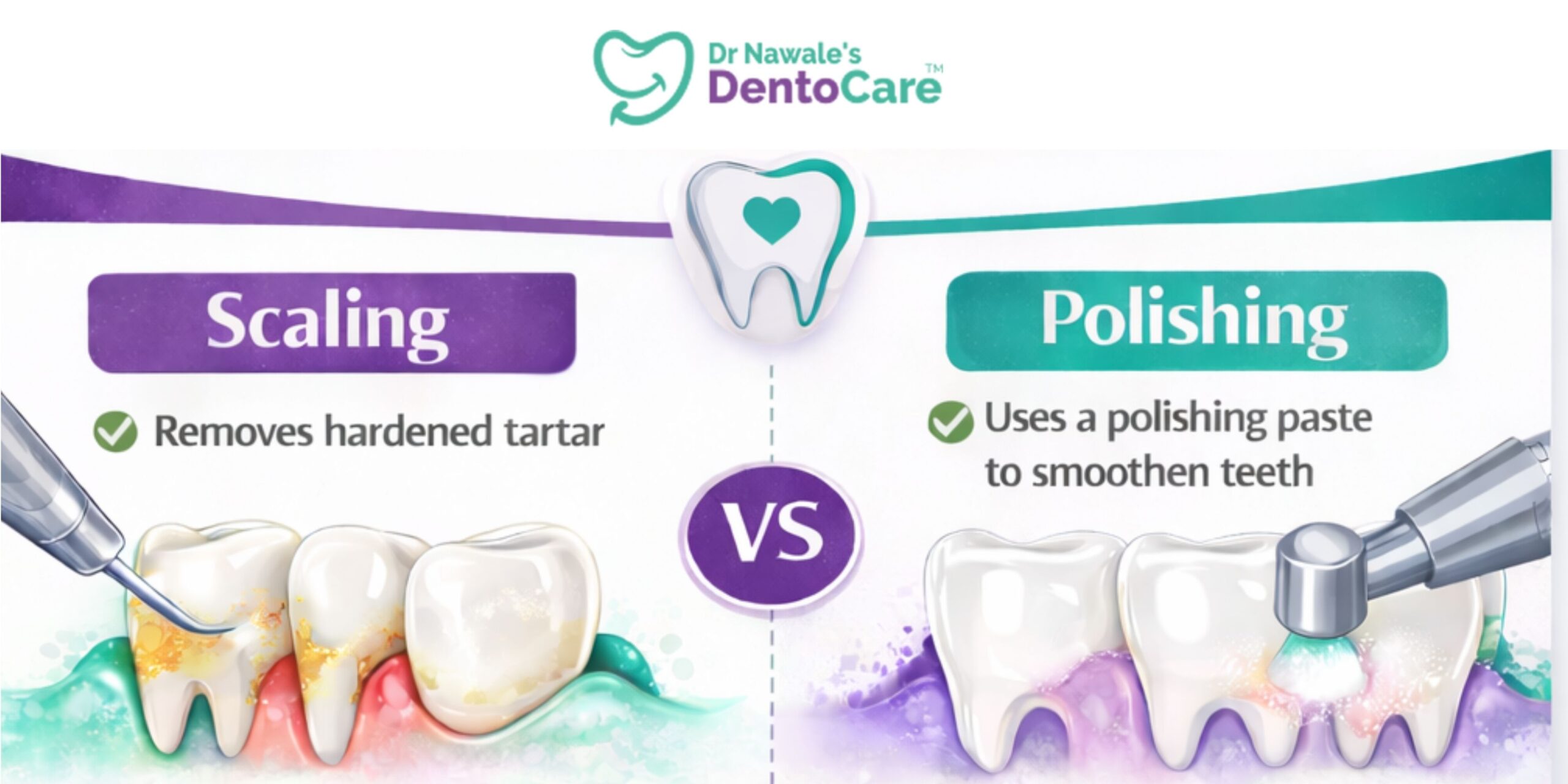
Dental scaling is a deep-cleaning process that removes tartar (calculus) and plaque — sticky deposits that build up on teeth over time.
Why Scaling Is Necessary
Even with diligent brushing and flossing, plaque can accumulate in places your toothbrush can’t reach — especially along the gumline and between teeth. When plaque stays on your teeth for too long, it hardens into tartar, which bonds strongly to the tooth surface. Tartar can only be removed by a dental professional.
If left untreated, this buildup can irritate the gums and lead to:
- Gingivitis (early gum disease)
- Periodontitis (advanced gum disease)
- Bad breath
- Tooth loss
In scaling, specialized dental instruments — either manual or ultrasonic — are used to gently and effectively remove these hardened deposits from your teeth and below the gumline.
What Happens During Scaling
At Dr Nawale’s Dentocare:
- Oral examination: The dentist checks your gums, teeth, and overall oral health.
- Ultrasonic scaler: This device loosens tartar using gentle vibrations and sprays water to wash it away.
- Manual scaling tools: For stubborn areas, the dentist uses precise hand instruments.
- Thorough removal: All visible tartar and plaque build-up are cleaned from both above and below the gumline.
Scaling helps control gum inflammation, prevents further bone loss, and restores a healthier gum environment.
What Is Dental Polishing?
Once scaling is finished, your dentist will move on to polishing — a cosmetic yet beneficial step that smoothens and brightens the tooth surface.
Why Polishing Matters
Even after scaling, your teeth might have rough spots where plaque can easily reattach. Polishing:
- Removes surface stains from tea, coffee, tobacco or food
- Smoothens the tooth surface
- Helps resist new plaque buildup
- Leaves your teeth looking cleaner and brighter
For polishing, a special polishing paste and a rotating rubber cup are used to buff the teeth to a smooth finish.
Scaling vs Polishing: Key Differences
While scaling and polishing are both part of a routine professional dental cleaning, they serve different purposes. Here’s a clear breakdown:
| Aspect | Scaling | Polishing |
| Main Purpose | Removes tartar and deep plaque | Removes surface stains and smoothens teeth |
| Targets | Above & below gumline | Tooth surface only |
| Tools Used | Ultrasonic & manual scalers | Polishing paste & rubber cup |
| Focus | Oral health improvement | Cosmetic finish |
| Frequency | As recommended by dentist (often 6 months) | Usually with every cleaning |
Together, scaling and polishing help reduce gum inflammation, prevent decay, and improve the appearance of your smile.
Why Regular Scaling & Polishing Is Important
Some patients delay dental visits because they think cleaning isn’t necessary unless they have pain. However, gum disease and dental decay are often painless early on. Regular scaling and polishing:
- Helps detect problems in early stages
- Reduces the risk of cavities
- Supports fresh breath
- Maintains healthier gums
- Improves overall oral wellness
At Dr Nawale’s Dentocare, every cleaning visit is also a chance for your dentist to assess your oral health and recommend preventive measures.
How Dr Nawale’s Dentocare Makes a Difference
Located in the heart of Chhatrapati Sambhajinagar, Dr Nawale’s Dentocare is known for its gentle, patient-centric dental care. With a focus on education, comfort, and quality results, we help patients of all ages maintain excellent oral health.
Experienced Care You Can Trust
Dr. Nitin Nawale (BDS) and Dr. Sheetal Nawale (BDS) bring years of clinical experience and a compassionate approach to dentistry. Their strengths include:
- Personalized treatment plans
- Thorough explanation of procedures
- Pain-free scaling and polishing
- Comfort-oriented dental environment
Our team understands that some patients may feel anxious about dental visits. That’s why we prioritize clear communication, a calm atmosphere, and gentle techniques that make treatments smooth and stress-free.
What to Expect at Your Visit
When you visit Dr Nawale’s Dentocare for scaling and polishing:
- Warm welcome & consultation: We start with a friendly check-in and discuss your concerns.
- Comprehensive examination: Your dentist checks for plaque, tartar, gum health, and any signs of dental issues.
- Professional cleaning: Scaling is done first to remove all built-up deposits, followed by polishing for a brighter smile.
- Advice & next steps: After the cleaning, you’ll receive tailored guidance for at-home care and future visits.
Aftercare Tips for a Lasting Smile
To maintain the benefits of scaling and polishing:
- Brush twice a day with fluoride toothpaste
- Floss daily
- Use a recommended mouthwash
- Avoid sugary foods and drinks
- Quit smoking or tobacco use
- Visit your dentist every 6 months
Good oral hygiene habits, along with regular professional care, keep your smile healthy for life.
Frequently Asked Questions (FAQs) on Scaling & Polishing
1. Is scaling and polishing painful?
Scaling and polishing are generally painless procedures. You may feel slight sensitivity if there is heavy tartar buildup or gum inflammation. At Dr Nawale’s Dentocare, Dr. Nitin Nawale and Dr. Sheetal Nawale use gentle techniques and modern equipment to ensure maximum comfort during the procedure.
2. How often should scaling and polishing be done?
Most patients should get scaling and polishing once every 6 months. However, if you have gum disease, diabetes, or heavy plaque buildup, your dentist may recommend more frequent visits.
3. Does scaling make teeth loose?
No. This is a common myth. Scaling does not loosen teeth. In fact, it removes tartar that weakens gum support. Teeth may feel slightly mobile after scaling because inflammation reduces—but this is a sign of healing, not damage.
4. Will scaling damage my teeth enamel?
Not at all. Scaling is a safe and essential dental procedure. It removes harmful deposits without damaging tooth enamel when performed by a qualified dentist, like the experts at Dr Nawale’s Dentocare.
5. Why do my teeth feel sensitive after scaling?
Temporary sensitivity can occur due to:
- Exposed root surfaces
- Removal of tartar near gums
This sensitivity usually subsides within a few days. Using a desensitizing toothpaste helps.
6. Is polishing necessary after scaling?
Yes. Polishing smoothens the tooth surface after scaling, making it harder for plaque to stick again. It also improves the appearance and shine of your teeth.
7. Can scaling and polishing whiten teeth?
Scaling and polishing remove stains, making teeth look cleaner and brighter, but they are not the same as teeth whitening. For noticeable whitening, professional bleaching treatments are recommended.
8. Is scaling and polishing safe during pregnancy?
Yes, dental cleaning is safe during pregnancy, especially in the second trimester. Maintaining good oral health during pregnancy is important for both mother and baby. Always inform your dentist if you are pregnant.
9. What should I avoid after scaling and polishing?
For the first 24 hours, avoid:
- Tea, coffee, and colored beverages
- Smoking or tobacco products
- Very hot or cold foods
Following your dentist’s instructions will help maintain results longer.
10. Why choose Dr Nawale’s Dentocare for scaling and polishing in Chh. Sambhajinagar?
Dr Nawale’s Dentocare offers:
- Experienced dentists – Dr. Nitin Nawale & Dr. Sheetal Nawale
- Gentle, pain-free dental cleaning
- Modern equipment
- Patient-friendly approach
- Trusted dental care in Chhatrapati Sambhajinagar
Final Thoughts
Scaling and polishing are more than just cosmetic procedures — they are essential parts of preventive dental care. While scaling removes harmful deposits that can lead to gum disease, polishing ensures a smooth, stain-free tooth surface that resists plaque buildup.
At Dr Nawale’s Dentocare in Chhatrapati Sambhajinagar, experienced dentists like Dr. Nitin Nawale and Dr. Sheetal Nawale are committed to helping you protect your oral health and enjoy a confident smile.
Book your appointment today and take the first step toward a healthier, brighter smile!
📍 Dr Nawale’s DentoCare – Chh. Sambhajinagar (Aurangabad)
📍 Location: 11, Atharva Plaza, Stadium Road, Garkheda, Chh. Sambhajinagar (Aurangabad), Maharashtra – 431009
Dr. Nitin Nawale | Dr. Sheetal Nawale
📞 Book an appointment today – +91 9090970971
🌐 Website: www.drnawaledentocare.com
📅 Flexible Appointments | 🦷 Expert Dental Care | 😁 Clear Results