Your Everyday Habits May Be Harming Your Smile
When we think about dental problems, we often blame sugary foods, poor brushing or inadequate oral hygiene. But some of the habits we perform every day can also put significant stress on our teeth.
You may bite your nails while concentrating, chew ice after finishing a cold drink, open a packet with your teeth, or clench your jaw when you are stressed. These actions may seem harmless because they happen occasionally. However, repeated mechanical stress can contribute to tooth wear, enamel damage, chips, cracks, sensitivity and jaw discomfort.
The good news is that many of these habits can be changed.
At Dr Nawale’s DentoCare, Chh. Sambhajinagar, Dr. Nitin Nawale and Dr. Sheetal Nawale provide comprehensive dental care focused on protecting your natural teeth and maintaining a healthy, confident smile.
Table of content
- Your Everyday Habits May Be Harming Your Smile
- Quick Answer: Which Everyday Habits Can Damage Your Teeth?
- 1. Nail Biting Can Damage Your Teeth
- 2. Chewing Ice Can Crack Your Teeth
- 3. Stop Using Your Teeth as Tools
- 4. Chewing Pens and Pencils Can Cause Tooth Damage
- 5. Teeth Clenching Can Put Excessive Pressure on Your Teeth
- 6. Teeth Grinding Can Gradually Wear Down Your Smile
- 7. Always Chewing on One Side Can Affect Your Bite
- What Happens When Teeth Are Repeatedly Stressed?
- Enamel Wear
- Chipped Teeth
- Cracked Teeth
- Tooth Sensitivity
- Jaw Discomfort
- How Can You Protect Your Teeth From Bad Habits?
- When Should You Visit a Dentist?
- Expert Dental Care at Dr Nawale’s DentoCare
- Dr. Nitin Nawale
- Dr. Sheetal Nawale
- Looking for the Best Dentist in Chh. Sambhajinagar?
- Frequently Asked Questions About Habits That Damage Teeth
- Quick Answers
- Takeaway: Small Habits Can Make a Big Difference
- Book Your Dental Consultation at Dr Nawale’s DentoCare
Which Everyday Habits Can Damage Your Teeth?
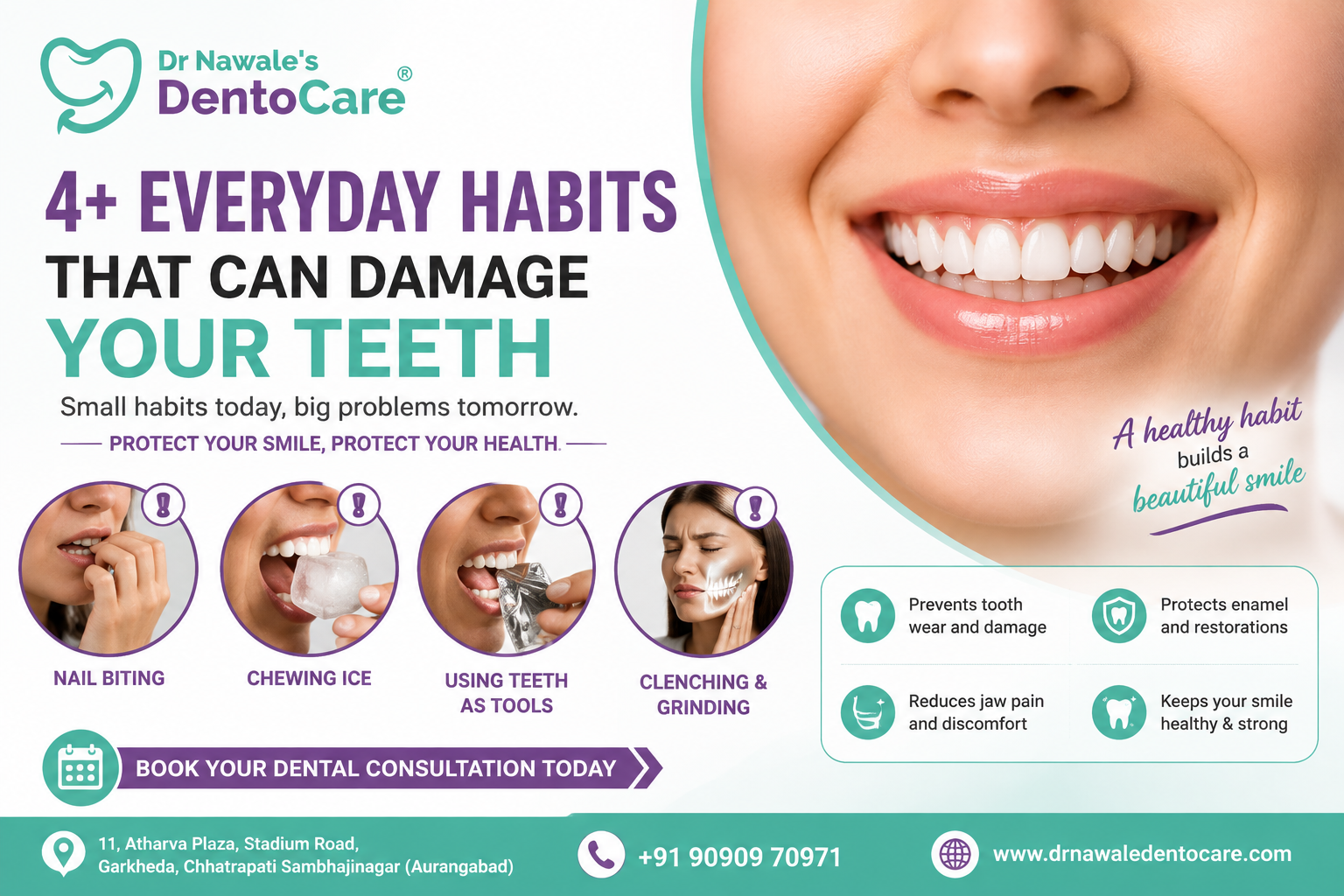
Some common habits that can damage teeth include:
- Nail biting
- Chewing ice
- Using teeth as tools
- Chewing pens, pencils or other hard objects
- Clenching your teeth
- Grinding your teeth
- Frequently chewing on one side of your mouth
These habits can place unnecessary pressure on teeth and may contribute to enamel wear, tooth fractures, chips, sensitivity and jaw problems.
Let’s understand each habit in detail.
1. Nail Biting Can Damage Your Teeth
Nail biting is a common habit, especially during periods of stress, concentration or nervousness.
Although fingernails may not seem extremely hard, repeatedly biting them puts your front teeth under unusual pressure. Over time, this can contribute to:
- Small chips in teeth
- Tooth edge wear
- Increased stress on front teeth
- Jaw muscle strain
- Damage to dental restorations such as fillings or crowns
Nail biting can also introduce bacteria from your hands into your mouth.
How to stop nail biting
Try identifying when you usually bite your nails. Is it while working, watching television, studying or feeling stressed?
Awareness is the first step. Keeping nails trimmed and finding another activity for your hands may also help.
If you notice chipped teeth, unusual tooth wear or jaw discomfort, a dental examination can determine whether the habit has already affected your teeth.
2. Chewing Ice Can Crack Your Teeth
Chewing ice may feel refreshing, particularly after drinking a cold beverage. However, ice is hard enough to place considerable force on your teeth.
Repeatedly chewing ice can potentially cause:
- Tooth chips
- Cracks or fractures
- Damage to fillings
- Damage to crowns or other restorations
- Increased tooth sensitivity
Is chewing ice bad for your teeth?
Yes. Regularly chewing hard ice can increase the risk of damaging teeth and dental restorations.
Instead of chewing ice, allow it to melt in your mouth or simply dispose of it after finishing your drink.
If you regularly crave or chew ice, particularly in large quantities, discuss the habit with your healthcare professional as well as your dentist.
3. Stop Using Your Teeth as Tools
Your teeth are designed primarily for eating and speaking—not for opening packages, cutting tape, removing tags or holding objects.
Using your teeth as tools can cause sudden excessive pressure on individual teeth.
This may result in:
- Chipped teeth
- Cracked teeth
- Broken fillings
- Damage to crowns or veneers
- Tooth fractures
That small shortcut of using your teeth to open something can potentially turn into an unexpected dental visit.
A simple rule:
If you wouldn’t use your fingernail for the job, don’t use your teeth.
Keep scissors, bottle openers and appropriate tools available instead.
4. Chewing Pens and Pencils Can Cause Tooth Damage
Many people unconsciously chew pens or pencils while studying, working or concentrating.
Hard objects can repeatedly press against the teeth and may contribute to:
- Small chips
- Tooth wear
- Cracked dental restorations
- Jaw muscle fatigue
If you catch yourself chewing a pen or pencil regularly, try replacing the habit with a non-damaging activity.
5. Teeth Clenching Can Put Excessive Pressure on Your Teeth
Teeth clenching means tightly pressing your upper and lower teeth together.
Some people clench their teeth during the day, while others do it unconsciously during sleep.
Stress, concentration and certain sleep-related habits can contribute to clenching.
Repeated clenching may put excessive force on the teeth and supporting structures.
Possible warning signs include:
- Jaw tightness
- Morning jaw discomfort
- Headaches
- Tooth sensitivity
- Flattened or worn tooth surfaces
- Increased tooth or restoration problems
If you frequently wake up with jaw discomfort or notice unexplained tooth wear, talk to a dentist.
6. Teeth Grinding Can Gradually Wear Down Your Smile
Teeth grinding, also called bruxism, involves repeatedly grinding or rubbing the teeth together.
Unlike an occasional habit, frequent grinding can place significant mechanical stress on teeth.
Possible signs include:
- Worn-down teeth
- Tooth sensitivity
- Small cracks or chips
- Jaw discomfort
- Facial muscle soreness
- Morning headaches
- Increased dental restoration problems
Some people grind their teeth while sleeping and may not know they are doing it.
A dentist can examine your teeth for characteristic signs of wear and recommend appropriate management based on the cause and severity.
7. Always Chewing on One Side Can Affect Your Bite
People sometimes develop the habit of chewing predominantly on one side because of discomfort, missing teeth, dental treatment or simple preference.
If you consistently avoid one side because a tooth hurts or feels uncomfortable, don’t simply continue adapting your chewing pattern.
There may be an underlying dental issue such as:
- Tooth decay
- Tooth sensitivity
- Cracked tooth
- Gum problems
- Missing teeth
- An uncomfortable filling or crown
Getting the underlying problem evaluated is better than permanently avoiding one side.
What Happens When Teeth Are Repeatedly Stressed?
Teeth are remarkably strong, but they are not indestructible.
Repeated excessive forces can contribute to tooth wear and structural damage. Depending on the habit and individual circumstances, this may appear as:
Enamel Wear
Enamel is the hard outer layer of the tooth. Excessive mechanical stress can contribute to abnormal wear.
Chipped Teeth
Sudden force from biting hard objects can cause a small portion of a tooth to break away.
Cracked Teeth
Repeated or excessive pressure can contribute to cracks, particularly in teeth that already have large restorations or other structural weaknesses.
Tooth Sensitivity
When protective tooth structures become worn or damaged, sensitivity to cold, hot or sweet foods may occur.
Jaw Discomfort
Clenching and grinding can overload the muscles and joints involved in chewing.
How Can You Protect Your Teeth From Bad Habits?
Protecting your smile doesn’t require complicated changes.
Start with these simple steps:
1. Stop using your teeth as tools
Use scissors, bottle openers and other appropriate tools.
2. Avoid chewing hard objects
Don’t routinely chew ice, pens, pencils or other non-food objects.
3. Become aware of clenching
During the day, check whether your jaw is unnecessarily tense.
4. Don’t ignore tooth sensitivity
Sensitivity can sometimes indicate an underlying dental problem.
5. Get regular dental examinations
A dentist can identify early signs of tooth wear, cracks, decay or other problems before they become more serious.
6. Address damaged teeth early
A small chip or crack should not automatically be ignored. Early evaluation can help determine the appropriate treatment.
When Should You Visit a Dentist?
You should consider scheduling a dental examination if you experience:
- A chipped or broken tooth
- Tooth sensitivity
- Pain while biting
- Persistent jaw discomfort
- Frequent headaches associated with jaw tension
- Worn or flattened teeth
- Cracked dental fillings
- Tooth pain after chewing something hard
- Difficulty chewing
- A habit of grinding or clenching your teeth
A dental examination can help determine whether the symptoms are related to tooth damage, bite problems, dental decay, gum problems or another condition.
Expert Dental Care at Dr Nawale’s DentoCare
If you are concerned about tooth wear, chipped teeth, sensitivity, clenching, grinding or other dental problems, professional evaluation is important.
Dr Nawale’s DentoCare is a modern dental clinic serving patients in Chh. Sambhajinagar (Aurangabad).
The clinic is led by:
Dr. Nitin Nawale
Dr. Nitin Nawale provides comprehensive dental care with a focus on maintaining oral health and helping patients protect their natural teeth.
Dr. Sheetal Nawale
Dr. Sheetal Nawale is also part of the dental care team at Dr Nawale’s DentoCare, providing patient-focused dental treatment and guidance.
The clinic also uses modern dental technology, including digital intraoral scanning and digital imaging facilities, to support accurate diagnosis and treatment planning where appropriate.
Looking for the Best Dentist in Chh. Sambhajinagar?
When searching online for the best dentist in Chh. Sambhajinagar, patients should look beyond a simple ranking or advertisement.
Important factors include:
- Dentist’s experience and expertise
- Diagnostic facilities
- Treatment options
- Hygiene and sterilization practices
- Patient communication
- Modern dental technology
- Comprehensive dental services
- Convenient location
- Proper diagnosis before treatment
Dr Nawale’s DentoCare is located at Atharva Plaza, Stadium Road, Garkheda, making it a convenient dental care option for patients in Chh. Sambhajinagar.
If you are searching for a dentist in Chh. Sambhajinagar, dental clinic in Garkheda, or modern dental clinic in Aurangabad, you can contact Dr Nawale’s DentoCare for a consultation.
Frequently Asked Questions About Habits That Damage Teeth
Can nail biting damage your teeth?
Yes. Repeated nail biting can place abnormal pressure on the front teeth and may contribute to tooth wear, small chips and jaw strain.
Is chewing ice bad for your teeth?
Yes. Chewing hard ice can increase the risk of chips, cracks and damage to dental fillings or other restorations.
Can using teeth as tools break them?
Yes. Using teeth to open packages, cut tape or perform other tasks can create excessive pressure and potentially chip or fracture a tooth.
Does clenching damage teeth?
Frequent or forceful clenching can place excessive pressure on teeth and may contribute to tooth wear, sensitivity, cracks and jaw discomfort.
What is bruxism?
Bruxism is the medical term commonly used for teeth grinding or clenching. It may happen while awake or during sleep.
How do I know if I grind my teeth at night?
Possible signs include worn teeth, jaw soreness on waking, headaches, tooth sensitivity or a partner noticing grinding sounds while you sleep. A dentist can also identify signs of tooth wear during an examination.
Can damaged enamel grow back?
Tooth enamel does not naturally regenerate once it has been permanently lost. However, good oral hygiene, fluoride exposure and professional dental care can help protect remaining enamel and strengthen teeth.
Should I visit a dentist for a small chipped tooth?
Yes, it is sensible to have a chipped tooth assessed, particularly if the tooth is painful, sensitive or sharp. A dentist can determine whether treatment is required.
How can I protect my teeth from everyday habits?
Avoid chewing hard objects, don’t use teeth as tools, stop nail biting, avoid chewing ice, become aware of clenching and maintain regular dental examinations.
Where can I consult a dentist in Chh. Sambhajinagar?
You can consult Dr Nawale’s DentoCare at 11, Atharva Plaza, Stadium Road, Garkheda, Chh. Sambhajinagar (Aurangabad). The clinic is led by Dr. Nitin Nawale and Dr. Sheetal Nawale.
Takeaway: Small Habits Can Make a Big Difference
Your teeth work hard every day, but they shouldn’t be used as tools or exposed to unnecessary mechanical stress.
Nail biting, chewing ice, chewing hard objects, using teeth as tools, clenching and grinding may appear harmless, but repeated habits can contribute to tooth wear, chips, cracks, sensitivity and jaw discomfort.
The best time to protect your teeth is before a small problem becomes a major one.
If you have noticed tooth sensitivity, chipped teeth, tooth wear, jaw discomfort or signs of grinding, schedule a dental consultation and get your teeth evaluated.
Book Your Dental Consultation at Dr Nawale’s DentoCare
Dr Nawale’s DentoCare
Dr. Nitin Nawale | Dr. Sheetal Nawale
📍 11, Atharva Plaza, Stadium Road, Garkheda, Chh. Sambhajinagar (Aurangabad)
📞 +91 90909 70971
🕐 Monday–Saturday: 10:00 AM–8:00 PM
🌐 www.drnawaledentocare.com
Protect your smile today. Book your dental consultation with Dr Nawale’s DentoCare.
Looking for the Best Dental Clinic in Chhatrapati Sambhajinagar?
Many patients from:
- Garkheda
- Kasliwal Nagar
- Beed Bypass
- CIDCO
- Jalna Road
- Samarth Nagar
- Ulkanagari
- Bajaj Nagar
- Seven Hills
- Usmanpura
visit Dr Nawale’s DentoCare for comprehensive dental care. The clinic is located at Stadium Road, Garkheda, Chhatrapati Sambhajinagar.
Dr Nawale’s DentoCare
📍 11, Atharva Plaza, Stadium Road, Garkheda, Chhatrapati Sambhajinagar (Aurangabad)
📞 90-90-970-971
Quick Answer
Question: What are the worst everyday habits for your teeth?
The common everyday habits that can damage teeth include chewing ice, biting nails, using teeth as tools, chewing pens or pencils, clenching the jaw and grinding the teeth. These habits can increase mechanical stress on teeth and may contribute to chips, cracks, tooth wear, sensitivity and jaw discomfort.
Question: What is the best way to prevent tooth damage from bad habits?
The best approach is to identify and stop damaging habits, avoid chewing hard objects, never use teeth as tools, manage daytime clenching and have regular dental examinations so early tooth wear or damage can be detected.
Question: When should I see a dentist for tooth damage?
See a dentist if you have a chipped or cracked tooth, pain while biting, persistent sensitivity, noticeable tooth wear, jaw pain or suspected teeth grinding. Early evaluation can help identify the cause and appropriate treatment.