
Are you experiencing pain at the back of your mouth, swollen gums near a wisdom tooth, difficulty opening your mouth or repeated infection around a partially erupted tooth? These symptoms may indicate a wisdom tooth problem that needs dental assessment.
Dr Nawale's DentoCare, located at 11, Atharva Plaza, Stadium Road, Garkheda, Chhatrapati Sambhajinagar (formerly Aurangabad), provides dental consultations for wisdom tooth concerns. A dentist can examine the affected area and determine whether monitoring, cleaning, medication for a diagnosed condition or wisdom tooth removal may be appropriate.
Wisdom teeth are the last molars to emerge, usually during the late teenage years or early adulthood. Sometimes there is insufficient space for them to erupt properly. A tooth may remain trapped beneath the gum, grow at an angle or emerge only partially. This can make cleaning difficult and increase the risk of inflammation, infection or decay.
Wisdom tooth removal is not necessary for everyone. If a wisdom tooth is healthy, fully erupted, functional and easy to clean, it may be monitored instead of removed. The decision should be based on a clinical examination and any necessary dental X-rays.
If you are looking for wisdom tooth removal in Chhatrapati Sambhajinagar, contact Dr Nawale's DentoCare to arrange a consultation.
Clinic Details
Dr Nawale's DentoCare
- Address: 11, Atharva Plaza, Stadium Road, Garkheda, Chhatrapati Sambhajinagar, Maharashtra – 431009
- Phone: +91 90909 70971
- Email: info@drnawaledentocare.com
- Clinic hours: Monday–Saturday, 10:00 AM–8:00 PM
What Is a Wisdom Tooth?
Wisdom teeth are the third molars located at the back of the mouth. Many people develop up to four wisdom teeth, although some develop fewer or none.
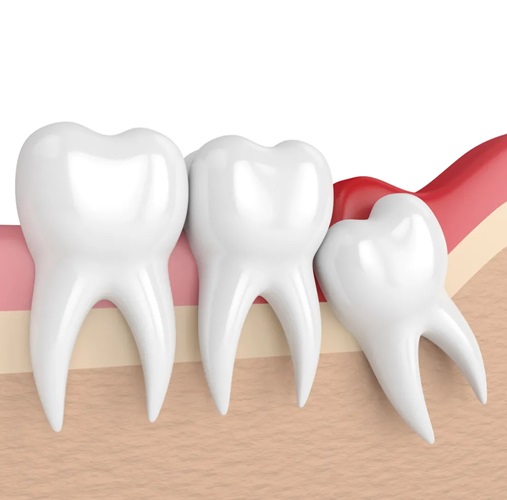
They may erupt normally when sufficient space is available. However, a wisdom tooth may become impacted if it cannot emerge fully because of its position or lack of space.
Common wisdom tooth situations include:
- Fully erupted wisdom tooth: The tooth has emerged through the gum and may be accessible for cleaning.
- Partially erupted wisdom tooth: Part of the tooth is visible, while the rest remains covered by gum.
- Impacted wisdom tooth: The tooth remains partly or completely trapped beneath the gum or within the jawbone.
- Angled wisdom tooth: The tooth grows at an angle that may affect the surrounding gum or neighbouring molar.
The position of a wisdom tooth alone does not automatically mean that extraction is necessary. Your dentist will assess symptoms, tooth condition, surrounding tissues and X-ray findings before recommending treatment.
What Are the Signs That a Wisdom Tooth Needs Dental Assessment?
Wisdom tooth problems can cause symptoms that range from mild gum irritation to significant pain and swelling.
Watch for the following signs:
- Pain or tenderness at the back of the mouth
- Swollen, red or bleeding gum tissue around a wisdom tooth
- Food repeatedly getting trapped behind the last molar
- Unpleasant taste or bad breath associated with the affected area
- Pain while chewing
- Difficulty opening your mouth comfortably
- Repeated gum infections around a partially erupted tooth
- Tooth decay affecting the wisdom tooth or neighbouring molar
- Swelling around the jaw or cheek
These symptoms do not always mean the wisdom tooth must be removed. A dental examination is needed to identify the cause and determine the most appropriate treatment.
When Is Wisdom Tooth Pain an Emergency?
Seek urgent dental or medical assessment if you have facial or neck swelling that is worsening, fever with dental swelling, difficulty swallowing or difficulty opening your mouth significantly.
Difficulty breathing or swallowing, rapidly spreading swelling, or swelling involving the neck or floor of the mouth requires emergency medical care. Do not wait for a routine appointment in these circumstances.
Why Can Wisdom Teeth Cause Pain?
Wisdom tooth pain can have several causes. Identifying the cause helps determine whether treatment should focus on the gum, the tooth itself or the surrounding structures.
1. Lack of Space During Eruption
If there is insufficient room for a wisdom tooth to emerge, it may remain partially erupted or become impacted. Pressure and inflammation around the area can cause discomfort.
2. Pericoronitis
Pericoronitis is inflammation or infection of the gum tissue around a partially erupted tooth. Food debris and bacteria may collect beneath the gum flap, causing tenderness, swelling, an unpleasant taste and difficulty opening the mouth.
3. Tooth Decay
Wisdom teeth can be difficult to reach with a toothbrush, particularly when they are partially erupted or positioned at an angle. Plaque accumulation may contribute to decay in the wisdom tooth or the neighbouring molar.
4. Damage to the Adjacent Tooth
An impacted or difficult-to-clean wisdom tooth may contribute to decay or damage affecting the second molar next to it. Dental examination and imaging help identify these problems.
5. Cyst or Other Pathology
In some cases, an impacted wisdom tooth may be associated with a cyst or other abnormal changes around the tooth. These conditions require professional assessment and appropriate management.
Wisdom tooth pain should not automatically be attributed to eruption pressure. Cavities, gum problems and other dental conditions can cause similar symptoms.
Does Every Wisdom Tooth Need to Be Removed?
No. A healthy, problem-free wisdom tooth does not automatically need extraction.
Your dentist may recommend monitoring when the tooth is healthy, functional, fully erupted and accessible for cleaning, with no evidence of disease.
Removal may be considered when there is a diagnosed problem, such as:
- Repeated inflammation or infection around the tooth
- Significant decay that cannot be predictably restored
- Damage or decay affecting the neighbouring molar
- Certain cysts or other pathology associated with the tooth
- A tooth-related problem that interferes with another necessary surgical or dental procedure
The decision should consider the benefits of removal, the risks of surgery, the tooth's position and the patient's overall oral health.
Preventive removal of an otherwise healthy, disease-free impacted wisdom tooth is not automatically indicated in every case. Ask your dentist to explain the examination and X-ray findings supporting the recommended treatment.
What Is the Difference Between a Simple Extraction and Surgical Wisdom Tooth Removal?
The approach depends on how much of the tooth has erupted, its position and the surrounding anatomy.
Simple Wisdom Tooth Extraction
A simple extraction may be possible when the tooth has erupted sufficiently and can be accessed and removed without a surgical approach.
The dentist examines the tooth and surrounding tissues to determine whether this method is suitable.
Surgical Wisdom Tooth Removal
A surgical approach may be required when the tooth is impacted, partly covered by gum or difficult to access. Depending on the case, the procedure may involve an incision in the gum, removal of a small amount of surrounding bone, or dividing the tooth into sections to facilitate removal. Stitches may be used when needed.
Not every wisdom tooth requires surgery. The method depends on the clinical findings and the tooth's position on examination and imaging.
If a tooth is deeply impacted or close to important nerves or other anatomical structures, referral to an appropriately trained oral surgeon or specialist may be recommended.
What Happens During Wisdom Tooth Removal?
Wisdom tooth extraction is planned according to the tooth's position, the complexity of the procedure and your medical and dental history.
Step 1: Consultation and Examination
The dentist asks about your symptoms, medical history, medications and previous dental treatment. The affected tooth, gum tissue, mouth opening and neighbouring teeth are examined.
Step 2: Dental X-Ray, If Needed
An X-ray may be recommended to assess the tooth's position, root shape and relationship to nearby structures. Additional imaging may be considered for selected complex cases when clinically justified.
Step 3: Treatment Discussion and Consent
The dentist explains whether monitoring, simple extraction, surgical removal or referral is appropriate. You should be informed about the expected benefits, possible risks, recovery, alternatives and estimated fees before proceeding.
Step 4: Anaesthesia
Local anaesthesia is commonly used to numb the area during extraction. Sedation or general anaesthesia may be considered in selected cases depending on complexity, patient needs and the facilities available.
You may feel pressure or movement during the procedure, but you should tell the treating professional if you experience pain.
Step 5: Tooth Removal
Depending on the case, the tooth is removed using a simple extraction technique or a surgical approach. The area is checked and the dentist provides instructions to help protect the blood clot and support healing.
Step 6: Aftercare and Follow-Up
You receive instructions about eating, cleaning the area, managing discomfort and recognising complications. A follow-up appointment may be recommended depending on the procedure and your recovery.
The time required varies. A straightforward extraction may be relatively quick, while a complex impacted tooth may take longer. Your dentist can explain the expected procedure time after examination.
Is Wisdom Tooth Removal Painful?
Local anaesthesia is used to numb the treatment area for many wisdom tooth extractions. During the procedure, you may notice pressure or movement, but the area should be adequately numb.
After the anaesthetic wears off, some pain, swelling, bruising or jaw stiffness can occur. These symptoms are often more noticeable after surgical removal and should generally begin to improve over the following days.
The amount of discomfort varies according to the complexity of the extraction and individual healing.
Follow the medication and aftercare instructions given by your treating dentist. Contact the clinic if pain becomes severe, swelling worsens or you develop other concerning symptoms.
Wisdom Tooth Removal Cost in Chhatrapati Sambhajinagar
The cost of wisdom tooth removal varies according to the complexity of the case. A straightforward extraction and a surgical removal of an impacted tooth may have different fees.
Factors affecting the total cost may include:
- Whether the tooth is fully erupted, partially erupted or impacted
- Whether simple extraction or surgical removal is required
- Tooth position and root anatomy
- Whether dental X-rays or additional imaging are required
- The type of anaesthesia used
- Whether the procedure requires referral or specialist care
- Follow-up treatment and any additional clinical needs
For current wisdom tooth removal charges, call Dr Nawale's DentoCare at +91 90909 70971. A more accurate estimate can be discussed after clinical assessment.
Recovery After Wisdom Tooth Removal
Recovery depends on the complexity of the extraction, your general health and how well the area heals. Mild pain, swelling and jaw stiffness are common after surgery, but the severity and duration vary.
Your dentist will provide instructions suited to your procedure. General recovery guidance may include the following.
During the First 24 Hours
- Follow the dentist's instructions for gauze and bleeding control.
- Avoid forceful rinsing, spitting or disturbing the extraction site.
- Do not touch the wound repeatedly with your tongue or fingers.
- Choose cool or lukewarm soft foods once you can eat safely.
- Avoid smoking or tobacco use, as this can interfere with healing.
- Rest and avoid strenuous physical activity as advised.
After the First 24 Hours
- Begin gentle rinsing with warm salt water if advised by your dentist.
- Brush your other teeth carefully while avoiding injury to the extraction site.
- Continue eating soft foods until chewing becomes more comfortable.
- Follow the prescribed medication instructions.
- Attend any recommended follow-up appointment.
Do not stop, start or change medication without appropriate advice. Antibiotics are not required after every wisdom tooth extraction; their use depends on clinical circumstances.
Meet the Dentists at Dr Nawale's DentoCare
Wisdom tooth treatment begins with an accurate diagnosis and a clear discussion of the available options. The appropriate clinician depends on the complexity of the extraction and the skills required for the case.
Dr. Nitin Nawale
BDS | Dental Surgeon | Fellowship in Endodontics
Dr. Nitin Nawale practises at Dr Nawale's DentoCare in Garkheda, Chhatrapati Sambhajinagar. His published clinic profile lists more than 22 years of clinical experience, with clinical interests in endodontics, root canal treatment, dental implants and full-mouth rehabilitation.
He completed his BDS at Government Dental College & Hospital, Aurangabad, and pursued a Fellowship in Endodontics at SMBT College, Sangamner.
His profile is included here as part of the clinic's dental team. For wisdom tooth removal, patients should confirm which clinician will assess and perform the extraction, particularly if surgical removal or specialist care may be needed.
View Dr. Nitin Nawale's profile:
https://drnawaledentocare.com/team-member/dr-nitin-nawale-dentist-aurangabad/
Dr. Sheetal Nawale
BDS | Dental Surgeon | Fellowship in Restorative Paediatric Dentistry
Dr. Sheetal Nawale is a dental surgeon at Dr Nawale's DentoCare. Her published clinic profile lists a Fellowship in Restorative Paediatric Dentistry and clinical interests in smile designing, orthodontic treatment, conservative dentistry, restorative dentistry and pediatric dental care.
She completed her BDS at Government Dental College & Hospital, Aurangabad, and pursued fellowship training in Restorative Paediatric Dentistry at YMT Dental College & Hospital, Kharghar, Navi Mumbai. Her profile states that she has been practising dentistry since 2004.
Her profile is included as part of the clinic's dental team information. Contact the clinic to confirm the appropriate treating clinician for your wisdom tooth concern.
View Dr. Sheetal Nawale's profile:
https://drnawaledentocare.com/team-member/dr-sheetal-nawale-dentist-aurangabad/
Why Seek Wisdom Tooth Assessment at Dr Nawale's DentoCare?
When you have wisdom tooth pain, the first step is to identify the cause rather than assume that extraction is always necessary.
At Dr Nawale's DentoCare, you can enquire about:
- Dental examination for wisdom tooth pain and swelling
- Assessment of partially erupted or impacted wisdom teeth
- Evaluation of nearby teeth and gum tissue
- Discussion of extraction and monitoring options
- Guidance on recovery and oral hygiene after treatment
- Advice on whether a complex case needs specialist referral
The clinic is located on Stadium Road in Garkheda, Chhatrapati Sambhajinagar (Aurangabad), Maharashtra.
Frequently Asked Questions About Wisdom Tooth Removal
1. Where can I get wisdom tooth removal in Chhatrapati Sambhajinagar?
You can contact Dr Nawale's DentoCare at 11, Atharva Plaza, Stadium Road, Garkheda, Chhatrapati Sambhajinagar, Maharashtra – 431009. Call +91 90909 70971 to enquire about an assessment.
2. How do I know if my wisdom tooth needs to be removed?
Removal may be recommended if the tooth causes repeated infection, significant decay, damage to a neighbouring tooth or another diagnosed problem. A healthy, problem-free wisdom tooth may instead be monitored. Your dentist can advise after examination and any necessary imaging.
3. What is an impacted wisdom tooth?
An impacted wisdom tooth is a tooth that cannot erupt fully into the mouth because of its position or lack of space. It may remain beneath the gum, within the jawbone or partly visible.
4. Can a wisdom tooth infection go away on its own?
Symptoms may temporarily settle, but this does not necessarily mean the underlying cause has resolved. Recurrent pain, swelling or infection around a wisdom tooth needs dental assessment. Seek urgent care for facial swelling, fever or difficulty opening your mouth, and emergency care for difficulty breathing or swallowing.
5. Is wisdom tooth removal painful?
Local anaesthesia is commonly used to numb the area during extraction. Some pressure may be felt during the procedure, and pain or swelling can occur during recovery. Your dentist will explain what to expect for your specific case.
6. How much does wisdom tooth removal cost in Aurangabad?
The cost depends on the tooth's position, the complexity of the extraction, imaging and other treatment requirements. The existing page lists ₹3,000–₹7,000 as an indicative range; call the clinic to verify current fees and inclusions.
7. What is the difference between simple extraction and surgical removal?
A simple extraction may be suitable for an accessible, erupted tooth. Surgical removal may be needed if the tooth is impacted or difficult to access and can involve an incision, removal of some surrounding bone or sectioning the tooth.
8. Do all impacted wisdom teeth need surgery?
No. The decision depends on whether the tooth is causing disease or poses a clinically significant risk. Some impacted teeth may be monitored, while others may require removal. Your dentist will explain the findings and options.
9. How long does wisdom tooth removal take?
The duration depends on the tooth's position and the complexity of the procedure. A straightforward extraction may be relatively quick, while a complex surgical removal may take longer. Your dentist can provide an estimate after assessment.
10. How long does recovery take after wisdom tooth removal?
Recovery varies by patient and procedure. Pain, swelling and jaw stiffness may be noticeable for several days and should generally begin to improve. More complex extractions can require a longer recovery period.
11. What can I eat after wisdom tooth extraction?
Soft foods that are easy to chew are generally helpful initially. Avoid hard, crunchy or sharp foods that may irritate the extraction site. Follow your dentist's instructions and return to your usual diet gradually as comfort improves.
12. Can I brush my teeth after wisdom tooth removal?
Yes, but brush carefully and avoid injuring the extraction site. Follow your dentist's instructions about when to begin gentle rinsing and how to keep the area clean.
13. What is dry socket?
Dry socket is a painful complication that can occur when the protective blood clot in the extraction socket is lost or does not form properly. If pain becomes severe or increases after extraction, contact your dentist for assessment.
14. Are antibiotics necessary after wisdom tooth removal?
Not in every case. Antibiotics are prescribed when clinically indicated, depending on infection and other patient-specific factors. Do not take leftover antibiotics or use them without a dentist's prescription.
15. When should I seek urgent help after wisdom tooth extraction?
Seek urgent dental advice for severe or worsening pain, increasing swelling, fever, pus or bleeding that does not stop with recommended pressure. Difficulty breathing or swallowing, or rapidly spreading facial or neck swelling, requires emergency medical care.
16. How do I book a wisdom tooth consultation at Dr Nawale's DentoCare?
Call +91 90909 70971 or email info@drnawaledentocare.com. The clinic is at 11, Atharva Plaza, Stadium Road, Garkheda, Chhatrapati Sambhajinagar, Maharashtra – 431009. Clinic hours are Monday–Saturday, 10:00 AM–8:00 PM.
Book Your Wisdom Tooth Consultation
Wisdom tooth pain, gum swelling or difficulty chewing can have several causes. A dental assessment helps identify the problem and determine whether monitoring, treatment or extraction is appropriate.
If you need wisdom tooth pain assessment or are considering wisdom tooth removal in Chhatrapati Sambhajinagar (Aurangabad), contact Dr Nawale's DentoCare to arrange a consultation.
Dr Nawale's DentoCare
11, Atharva Plaza, Stadium Road, Garkheda, Chhatrapati Sambhajinagar, Maharashtra – 431009
Phone: +91 90909 70971
Email: info@drnawaledentocare.com
Hours: Monday–Saturday, 10:00 AM–8:00 PM
HOW CAN WE HELP?
Schedule Your Consultation
Booking an appointment with our team is convenient and easy.